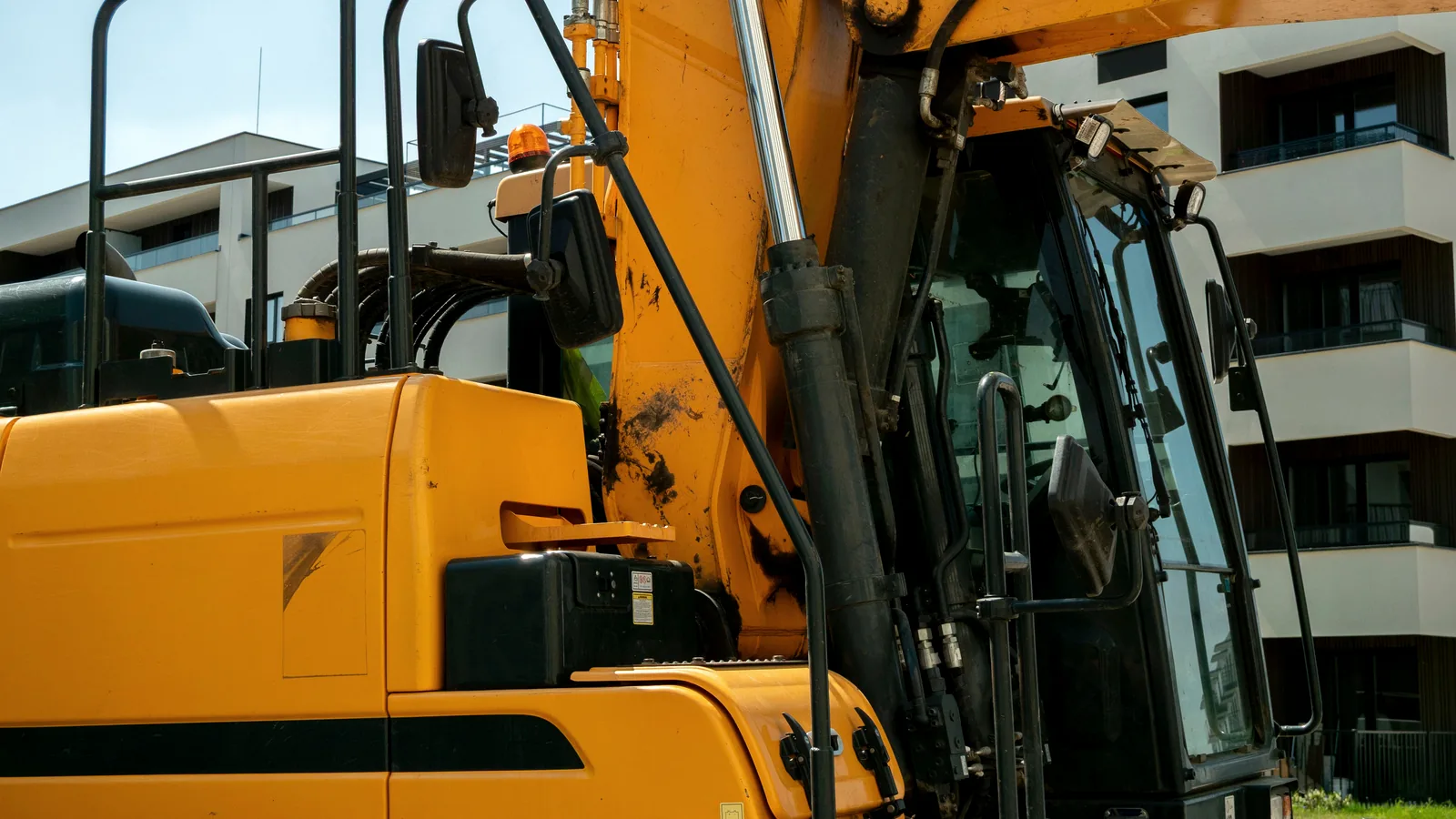
The hydraulic system is the lifeblood of any modern excavator. It converts engine power into fluid power to operate the boom, arm, bucket, and travel motors. When the hydraulic system experiences a drop in performance, identifying whether the failure lies within the main pump, the control valves, or the individual cylinders is vital to keeping diagnostic costs down.
Table of Contents
Common symptoms and root causes
Hydraulic problems often appear as slower cycle times, weak digging force, heat buildup, or inconsistent movement. The first diagnostic step is to determine whether the issue affects every function or only one circuit.
Slow or sluggish operation across all functions
- The Cause: This usually points to a failing main hydraulic pump or a misadjusted main relief valve. Over time, internal clearances inside the pump widen due to wear, which causes fluid to bypass internal chambers and lowers overall volumetric efficiency.
- The Fix: Connect a calibrated pressure gauge to the main pump test port. Cycle the bucket cylinder to full stroke to read the relief pressure. If it falls below factory specifications, check the relief valve before replacing the pump.
High hydraulic fluid temperatures
Hydraulic systems function best when fluid temperatures remain between 120°F and 150°F (50°C to 65°C). If temperatures cross 180°F (82°C), the oil begins to break down, which quickly destroys internal rubber seals and O-rings.
- The Cause: High temperatures are caused by continuous internal leakage, oil slipping past seals and creating friction, or a blocked hydraulic oil cooler.
- The Fix: Clean external debris out of the cooling fins. Use an infrared thermometer to trace temperatures along the main lines; a sharp temperature jump across a specific valve often reveals where internal fluid bypass is happening.
Preventative parts replacement schedule
To avoid catastrophic failures that send metal debris traveling throughout your entire hydraulic network, adhere to this standard replacement interval schedule:
- Hydraulic Return Filters: Replace every 250 to 500 operating hours.
- Pilot Filter Elements: Replace every 1,000 operating hours.
- Main Hydraulic Fluid: Drain and refill every 2,000 to 4,000 operating hours, depending on operating conditions.
FAQ
Practical questions before sourcing
What are common signs of hydraulic pump wear?+
Common signs include slow movement across multiple functions, weak digging force, abnormal pump noise, overheating, and low pressure readings at the test port.
Why does an excavator hydraulic system overheat?+
Overheating may come from internal leakage, blocked oil coolers, low or contaminated oil, restricted filters, relief valve issues, or components bypassing oil under load.
What details should be sent when requesting hydraulic parts?+
Send the machine model, serial number, part number, nameplate photos, port layout, shaft or mounting details, cylinder dimensions, old-part photos, quantity, and destination.
Can a control valve problem look like a pump problem?+
Yes. A valve that leaks internally or sticks can reduce pressure and slow functions, which may appear similar to pump wear. Pressure testing helps separate pump, valve, and cylinder faults.
Which filters and seals should be checked during hydraulic maintenance?+
Return filters, pilot filters, suction strainers, cylinder seals, hose seals, O-rings, and fitting seals should be reviewed regularly, especially after contamination or overheating.
Request a quote
Prepare a clearer spare parts RFQ
Send the part number, machine model, photos, quantity, destination country, or other RFQ details. Apex can review the request before supplier coordination.
Send RFQ details